Home Corruption prevention

Corruption prevention

  Corrupt acts include:

   Corruption Prevention

Corruption prevention aims to strengthen national security, promote social welfare, improve the quality of administrative, public, and other public sector services, and safeguard the freedom of fair competition, so that corruption hinders the development of democracy and the economy as little as possible.

Klaipėdos valstybinė kolegija/ Higher Education Institution implements the Policy of creating an anti-corruption environment at KVK which sets forth the principles of corruption prevention, commitments, and measures aimed at ensuring compliance with legal requirements, as well as the principles of reliability, integrity, transparency, and ethics.

Prepared Anti-Corruption Rules of Conduct for Employees of KVK establish standards of anti-corruption conduct, requirements, instances of corruption-related risks, and actions to be taken when encountering them.

If you believe you have encountered a situation involving corruption, act responsibly. Report it to the person responsible for corruption at the KVK.

Reports may be submitted by current and former employees of KVK or by individuals associated with the KVK through contractual relationships (studies, consulting, internships, practical training, volunteering, etc.).

You can report a violation by:

  • filling out the online violation report form (įdėti nuorodą)
  • filling out a free-form report, specifying:
  • the specific facts of the violation;
  • the person who is about to participate, is participating, or has participated in the violation;
  • whether they have already reported this violation, if so, to whom it was reported and whether a response was received;
  • your first name, last name, personal identification number, or date of birth (if you do not have a personal identification number), contact information, and send it by email to: korupcijosprevencija@kvk.lt
  • directly, at an agreed time, to the competent authority at the address: Jaunystės St. 1, Klaipėda, Room 119. Tel. +370 (612) 94025

All information received regarding potentially unlawful actions or other violations is confidential. The information received will not be made public, disclosed to those who have Procedures for the Submission and Investigation of Repots of Violations at KVK

The Law on the Protection of Whistleblowers of the Republic of Lithuania establishes a protection mechanism for individuals who have reported violations at an institution with which they have or had a service, employment, or contractual relationship.

The Law also establishes the rights and obligations of persons who have reported violations in institutions, the grounds and forms of their legal protection, as well as measures for the protection, encouragement, and assistance of such persons, with the aim of creating appropriate opportunities to report violations of the law that threaten or violate the public interest, and to ensure the prevention and detection of such violations.

The laws of the Republic of Lithuania prohibit defaming or falsely accusing another person of committing a crime. A person who knowingly provides false information or discloses a state or official secret or a professional secret shall be held liable in accordance with the procedure established by law.

Gift Policy

KVK aims to ensure transparency and ethical conduct and to avoid conflicts of interest between public and private interests; employees are guided by KVK Gift Acceptance Policy.

What is considered a gift?

A gift – any item or property right transferred without compensation that can be valued in monetary terms, where such a gift is directly related to the activities of an educational institution and/or the duties performed by its administrators or employees. These may include:

✔ Tangible items (souvenirs, flowers, books, etc.)

✔ Services (travel, training, accommodation, transportation)

✔ Tickets to events, discounts, privileges

What kinds of gifts may be accepted?

The administrators and staff of educational institutions may not accept gifts while performing their duties, except in the following cases:

Gifts in Accordance with Tradition

This refers to gifts received in accordance with established traditions at official events, ceremonies, meetings, or visits organized by educational institutions or other entities, when participating in the performance of duties related to official business.

Gift According to International Protocol

This is a gift received in accordance with the rules or traditions of international protocol recognized worldwide, while participating in official events, ceremonies, meetings, or visits organized by educational institutions or other entities, in the performance of official duties.

Representational gift
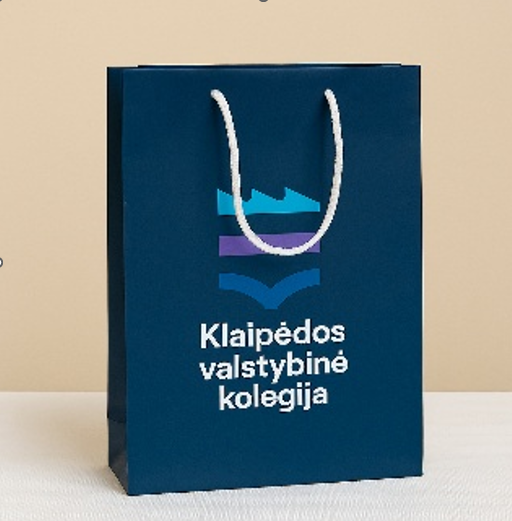
This is a gift bearing the symbols of a country, institution, or other entity, given or received on behalf of an educational institution at official events or meetings with the aim of fostering cooperation, strengthening ties, or representing the institution.


Gift related to professional duties or celebrations

Such gifts are given in accordance with traditions that have developed over time at the national or country level, related to professional duties or celebrations that have symbolic significance, such as:
✔ In celebration of Science and Knowledge Day
✔ In celebration of International Teachers’ Day
✔ Celebrations for the 100th Day, Graduation, and the Last Bell


This gift is not included on the list of unacceptable gifts and is considered the property of the recipient.

Restrictions on gifts:

❗ An employee who receives a gift and believes that its value may exceed 150 euros must notify the person responsible for corruption prevention within 5 business days and hand over the gift to that person.

❗ Gifts valued at more than 150 euros are recorded in the KVK gift registry and are considered the property of the Institution.

What kinds of gifts are inappropriate?

🚫 Alcoholic beverages, tobacco products

🚫 Cash, gift cards, travel, payment for services

🚫 Gifts given with the intent to influence decisions or secure favorable terms

🚫 Gifts from companies participating in public procurement or providing services to the KVK

Sample scenarios

AcceptableUnacceptable
Flowers or a symbolic gift to mark International Teachers’ Day.Gift coupon or cash gift for a birthday from a student or supplier.
Small gift presented during an official international meeting.Tickets to the event, if they are provided by a participant in the public procurement tender.
Written thanks – a postcard, an official letter to management, etc.Groups of students give the lecturer a gift before or after the exam.

Coordination of public and private interests

In accordance with the Law of the Republic of Lithuania on the Reconciliation of Public and Private Interests (įdėti nuorodą) and the Director’s order approved by the KVK, the following persons are required to declare their private interests at the KVK:

  1. Persons holding the following positions:
    1.1. Members of the Council and the Academic Council;
    1.2. Director;
    1.3. Deputy Directors;
    1.4. Heads of Centres;
    1.5. Heads of Departments;
    1.6. Heads of Divisions/Offices.
  2. Persons performing these functions:
    2.1. Persons performing the duties of a member of the procurement committee;
    2.2. Simplified procurement contractors;
    2.3. Persons performing the functions of procurement;
    2.4. Persons performing the functions of procurement initiators.


In accordance with the provisions of the Law on the Prevention of Corruption of the Republic of Lithuania (įdėti nuorodą), a list of positions is provided for which, prior to appointment (permanently or temporarily) or proposing a candidate for appointment, a written request must be submitted to the Special Investigation Service of the Republic of Lithuania (hereinafter referred to as the SIS) to gather information:

  • KVK Director;
  • KVK Deputy Directors;
  • Deans of Academic units (Faculties);
  • Accountant;
  • Head of the Public Procurement Division and Specialist.

This is a situation in which a person uses their position or influence to grant privileges to relatives, partners, or acquaintances.

Employees must avoid conflicts of private and public interest, declare private interests, and, in the event of an actual or potential conflict of interest, report it and recuse themselves in accordance with the procedures set forth in the Anti-Corruption Rules of Conduct (įdėti dokumento nuorodą).

⚠️  What should you do if you notice or encounter nepotism?

–  Do not make decisions if the situation involves your relatives or personal connections;

–  Inform your immediate supervisor or the person responsible for creating an anti-corruption environment;

–  If necessary, report the issue by filling out the violation report form;


Last updated: 2026-07-20