- Placement scope (percentage)
17.8
- Placement duration (hours)
850
Name of the placement:
Automotive equipment placement
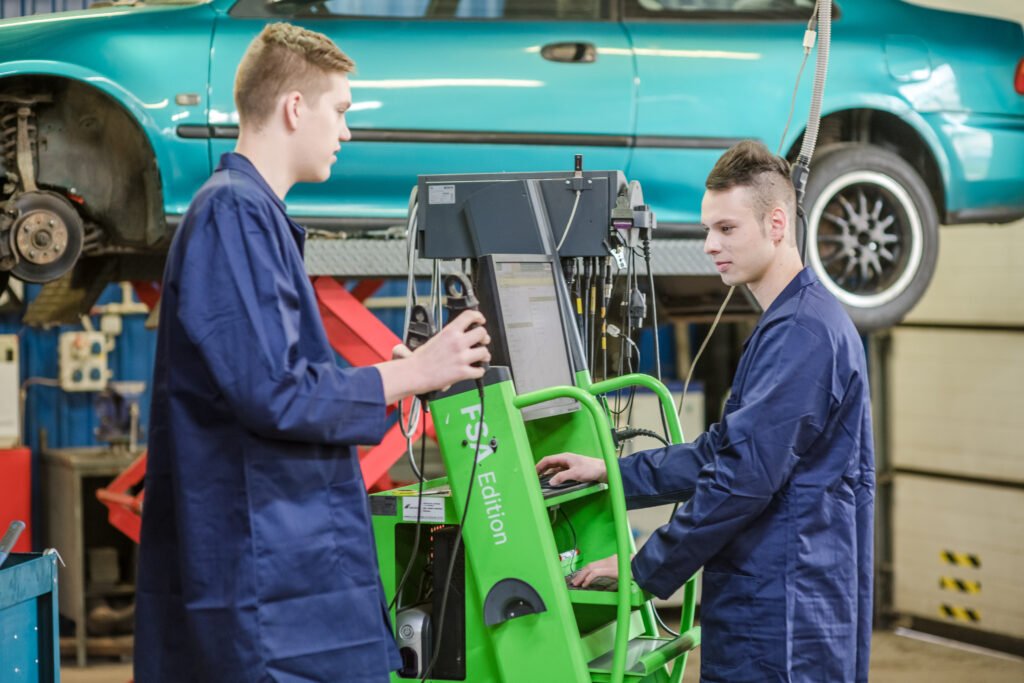
Activities during the placement: Development of practical skills using specialised software and databases (Audatex, Autodata, HaynesPro for passenger cars and lorries), selecting maintenance and repair technologies. Knowledge is deepened of the design and operating principles of vehicle parts, assemblies and systems, taking into account operating conditions. Students are introduced to vehicle technical operation activities, the production environment and practical specialist skills, the technological process of vehicle servicing, parts supply, production capabilities, and the disposal of waste generated during technological processes. Students are introduced to the methods and technologies used to ensure environmental and road traffic safety requirements.
- Placement scope (credits)
6
Name of the placement:
Placement in organising the operations of car service companies
Activities during the placement: Working in teams, students will set up a company, taking into account and analysing the specifics of quality management, personnel and market management; the requirements for establishing a company and tax requirements; and the requirements for car service companies and the organisation of vehicle maintenance and repair processes. Will acquire practical business management skills during the business placement. Will introduce students to the organisation’s activities (will visit at least 3 of the most advanced companies: UAB Veho Lietuva, UAB Solorina, UAB Scania Lietuva, UAB Inchcape Motors, UAB TechRuna, UAB Sostena, UAB Volvo Lieruva)
- Placement scope (credits)
6
Name of the placement:
Commercial Vehicle Service Technology Placement
Activities during the placement: During the placement, students develop and consolidate practical skills in carrying out the diagnostics, technical maintenance and repair of commercial vehicles under real conditions; analyse the principles of work organisation, and communicate with colleagues, parts suppliers and customers; organise the technological processes of technical maintenance and repair of lorries, applying the standards, laws and other legal documents required for carrying out the activity; and analyse the distribution of work and responsibility among company employees, customer service standards, and the range of services provided.
- Placement scope (credits)
8
Name of the placement:
Passenger Car Service Technology Placement
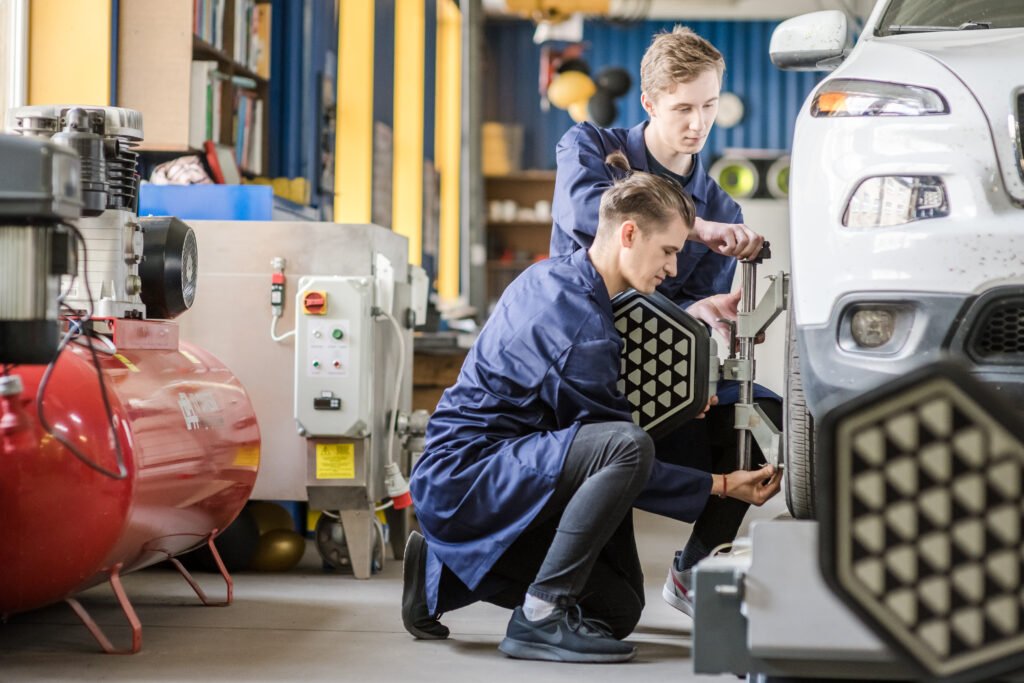
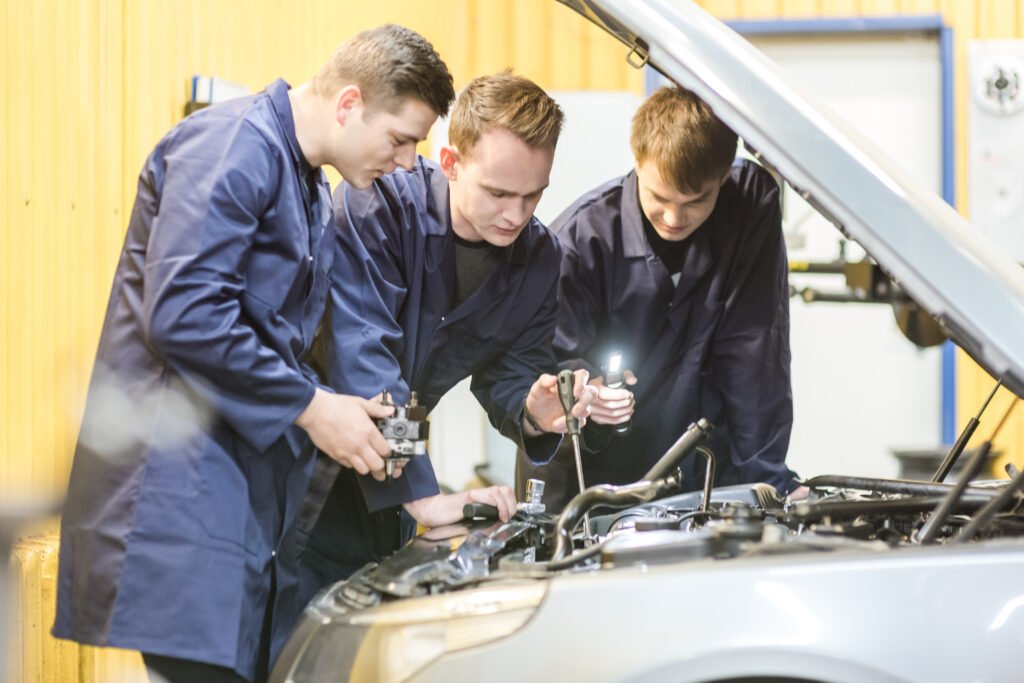
Activities during the placement: During the placement, students develop and consolidate practical skills in carrying out the diagnostics, technical maintenance and repair of passenger cars under real conditions; analyse the principles of work organisation, and communicate with colleagues, parts suppliers and customers; organise the technological processes of vehicle technical maintenance and repair, applying the standards, laws and other legal documents required for carrying out the activity; and analyse the distribution of work and responsibility among company employees, customer service standards, and the range of services provided.
- Placement scope (credits)
12
Name of the placement:
Final placement
Activities during the placement: Students will apply in practice the theoretical and practical knowledge acquired during their studies: using the technical and software equipment required to carry out maintenance and repair work; applying technological innovations, organising and managing the technological process of vehicle maintenance and repair; analysing the documentation of work carried out; arranging the material, technical and equipment supply of maintenance and repair workstations within the company; applying regulatory documents and standards to ensure quality control of maintenance and repair work; planning the scope of repair work on the basis of economic calculations; and applying occupational, environmental and personal safety requirements within the company.
- Placement scope (credits)
6
- Placement scope (percentage)
3.3
- Placement duration (hours)
160
Total:
- Placement scope (credits)
38
- Placement scope (percentage)
21.1
- Placement duration (hours)
1,010
Choice of placement venues:
Students can choose or find a placement in Klaipėda city, Klaipėda district, the Western Lithuania region, or anywhere else in Lithuania or abroad.
Final placements are carried out at:
At companies providing car servicing for passenger vehicles:
UAB ARMI servisas, UAB Sostena, UAB Solorina, UAB TechRuna , UAB Baltic Auto, UAB Vecho Lietuva, UAB Inchcape Motors, UAB Hokla, UAB Krasta Auto, UAB Bosch Car Service, UAB Eoltas, UAB Autobrava Motors, UAB Smagratis, UAB Autoaibė, UAB Automeistras, UAB Klaipėdos autoservisas, UAB AutoVelna, UAB Klaipėdos Melga, UAB Klasera, UAB Autofortas Motors, UAB Autobaltva, UAB Gitanos servisas, UAB Autofora, UAB Autopostas, UAB Autokorega, UAB Autoratas
At companies providing vehicle servicing for trucks:
UAB VOLVO Lietuva, UAB Scania Lietuva, UAB Klaipėdos Skuba, UAB Jupojos technika, UAB Vech Lietuva, UAB Agrologistika, UAB Vlantana, A. Gricius Road Transport Company, UAB Gedlito transportas, UAB Klaipėdos autobusų parkas, UAB Adampolis, UAB Autotreksas, UAB Techtransa, UAB EVA King, UAB Transketa, UAB Petro servisas, UAB Okreta, UAB Padremas.
Since 2019, students have been able to complete placements at vehicle maintenance and repair companies in Germany and Austria.